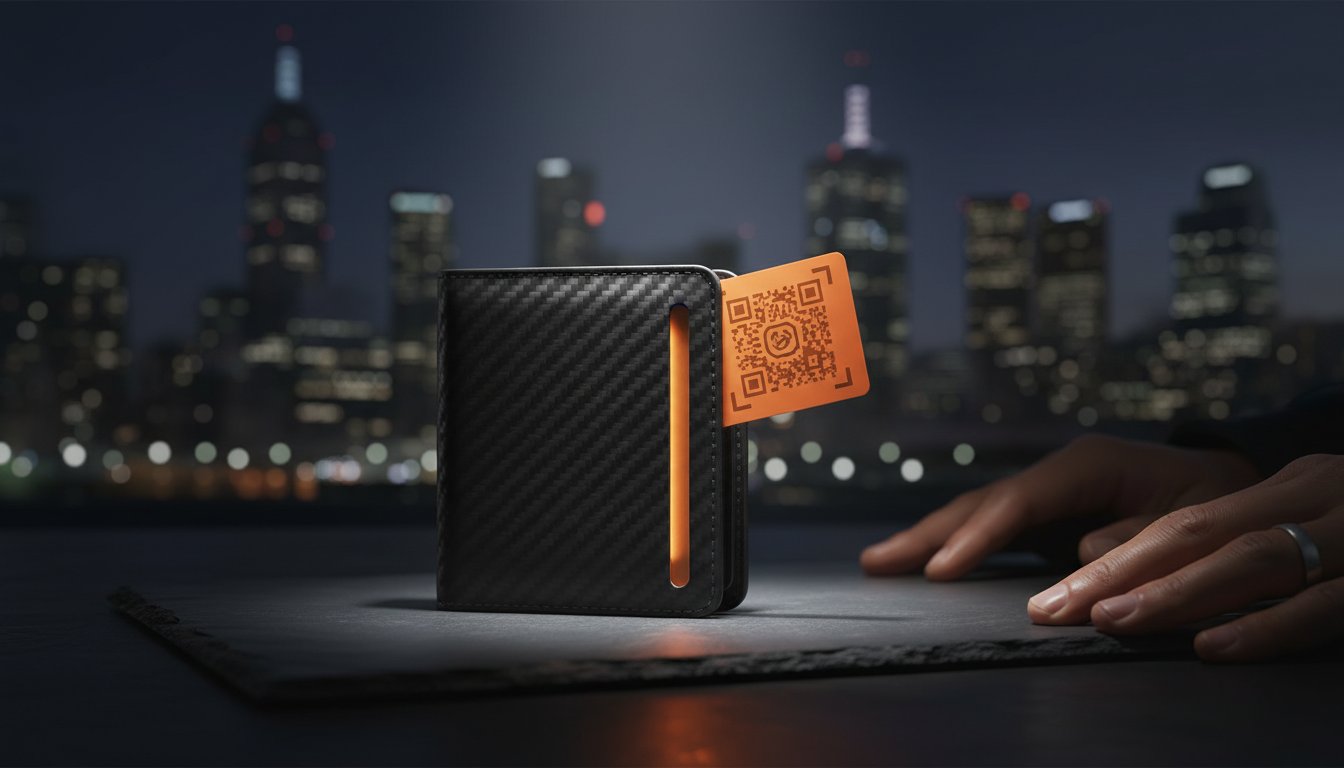
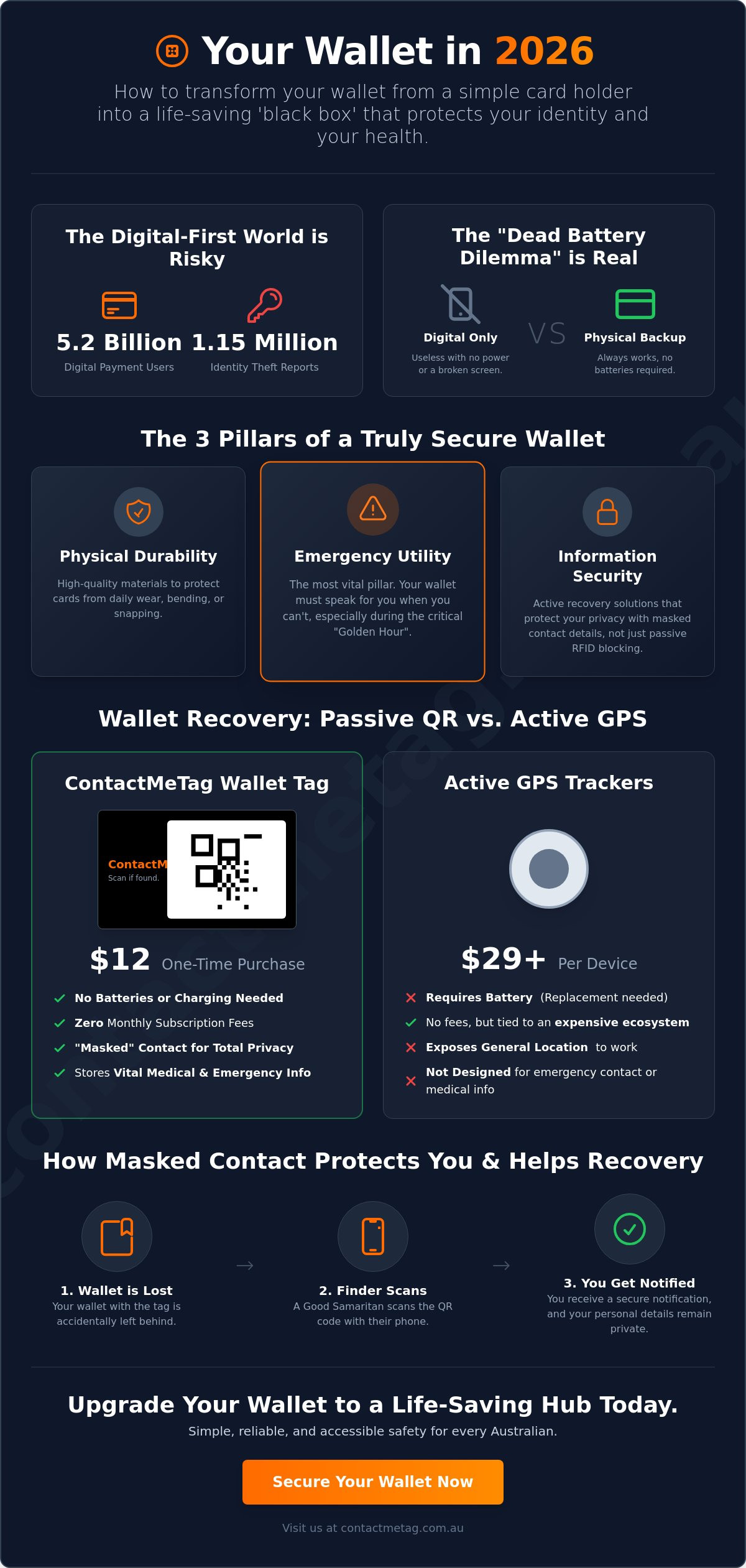
What if your wallet was actually a personal "black box" designed to protect your life during a crisis? In 2026, over 5.2 billion people have embraced digital payments, yet identity theft reports hit a record 1.15 million in the first three quarters of 2025. You likely feel that nagging worry about your data being skimmed or the dread of losing your cards while you're out and about. It is a common concern, especially when you consider how difficult it is to organise replacements for every card you carry.
You want to stay protected and secure without the burden of monthly fees or complex GPS hardware. We agree that safety should be simple, reliable, and accessible to everyone. This guide will show you how to transform your wallet from a simple card holder into a life-saving safety hub that protects your identity and your health. You will discover how to create an instant, masked connection for emergency responders and Good Samaritans.
We will explore the latest 2026 security trends, compare the $29 AirTag 2 with the $12 ContactMeTag Wallet Tag, and explain how simple technology can have a life-changing impact. When you can't speak, your QR code speaks.
Key Takeaways
- Learn why your modern wallet must act as a hybrid "black box" to protect both your identity and your health in 2026.
- Understand the critical limitations of digital-only storage and why physical backups are essential when phone batteries go flat or screens break.
- Discover how to ensure first responders access your vital medical details instantly during the "Golden Hour" even if your smartphone is locked.
- Compare passive QR technology with active GPS trackers to find a reliable recovery solution that avoids battery anxiety and monthly subscription fees.
- Find out how masked contact details protect your privacy while allowing a Good Samaritan to help you during an emergency.
Defining the 2026 Wallet: More Than Just a Place for Cash
Your pocket looks different than it did five years ago. In 2026, the traditional leather pouch has evolved into a sophisticated hybrid of physical storage and digital identity. While you might still carry a few notes or a plastic driver's licence, your wallet now serves as a bridge to your Digital wallet. This shift means that if you lose your physical cards, you aren't just losing cash; you're losing the keys to your entire digital life. The minimalist wallet trend has pushed us toward slimmer designs, but smaller size shouldn't mean smaller security. In fact, as wallets get thinner, the risk of them slipping out of a pocket unnoticed actually increases.
Modern security isn't about bulky chains or thick padding. It's about logic. A truly "Smart Wallet" in 2026 doesn't require batteries, charging cables, or expensive GPS hardware that eventually dies. Instead, it uses simple, durable technology to provide a voice for the owner. The 2026 wallet is a critical safety hub for every Australian, acting as a silent guardian for your identity and your health.
The Three Pillars of a Secure Wallet
Physical durability remains the first line of defence. High-quality materials like treated leather or aerospace-grade polymers protect your cards from bending or snapping during daily use. However, physical strength is useless without information security. In 2026, this means protecting yourself against more than just pickpockets; it means securing the data on your cards from invisible threats. Finally, emergency utility is the most vital pillar. Your wallet should be the first place a responder looks to find out who you are and who to call if you're found unconscious. A wallet that can't speak for you is only doing half its job.
Why RFID Protection is Only the Beginning
RFID skimming is a well-known threat across Australia, where criminals use handheld scanners to "tap" your cards through your clothes in crowded places like Flinders Street Station or the Queen Street Mall. While most modern wallets include signal-blocking layers, this is a passive form of protection. It acts like a wall, but a wall doesn't help you if you leave your wallet on a park bench or a cafe table. Signal blocking is a defensive move that does nothing to facilitate the recovery of your items. Contrast this with active communication. By including an Emergency QR Code Card — Wallet Tag, you turn a silent object into a proactive tool. If a Good Samaritan finds your lost property, they can scan the code to initiate a masked connection, allowing for a safe reunion without exposing your private home address. Every scan counts when your property is on the line.
The Evolution of Wallet Security: From Leather to Logic
Security for your personal items has come a long way since the days of bulky leather pouches and heavy biker chains. We've moved from simple physical barriers to sophisticated biometric sensors and fingerprint-activated payment cards. Many experts predicted these high-tech shifts would signal the end of lost wallets, yet the core problem remains. Technology is fragile. In 2026, true security is about logic and redundancy rather than just fancy gadgets. It's about ensuring your wallet works even when your phone doesn't.
Digital vs. Physical: Why You Need a Hybrid Approach
The "Dead Battery" dilemma is a real risk for the 20% of Australians who now leave home without a physical backup. If your smartphone battery dies or your screen smashes during a solo trip, you lose your digital ID, your tickets, and your ability to pay for a way home. To stay safe, you must organise your physical carry to complement your digital one. Keep a physical "In Case of Emergency" (ICE) card tucked behind your driver's licence. This simple step provides a reliable backup that never needs a charging cable. For a modern solution that bridges this gap, you might slip an emergency card in your wallet to ensure responders have instant access to your details.
Privacy in Public: The "Masked" Contact Revolution
In 2025, identity theft reports hit a record 1.15 million, making privacy a top priority for everyone. Old-fashioned methods like writing your mobile number on a card are now dangerous. If your wallet is lost, that information can be exploited by anyone who finds it. The "masked" contact revolution changes the game. By using a secure QR code, your personal details remain hidden from prying eyes. This technology aligns with Australian privacy principles by ensuring your data is only accessible when it's actually required. When a Good Samaritan scans your tag, they can message you through a secure, masked relay. You get the benefit of being reachable without the risk of exposing your private phone number or home address. This provides a deep sense of peace of mind, knowing you are protected by a vigilant, silent guardian.
Why Your Wallet Needs a Voice in an Emergency
In a medical crisis, time is the only currency that matters. Doctors often refer to the first 60 minutes after a trauma as the "Golden Hour." This is the window where rapid treatment has the most significant impact on survival rates. If you're found unconscious, your wallet is typically the first place an Australian paramedic or police officer looks to identify you. While digital security is a priority, as highlighted in the FCC mobile wallet security guide, a locked smartphone is a brick to a first responder. They can't bypass your passcode to find your emergency contacts or medical history.
This is where the concept of a "vocal" accessory becomes life-saving. When you can't speak, your QR code speaks. By integrating a simple scan point into your daily carry, you provide instant access to the facts that matter most. Road responders across Australia are trained to check for medical ID jewellery or cards during their initial assessment. Providing this data in a clear, digital format ensures there's no guesswork during those critical first few minutes of care.
The Problem with Traditional ICE Cards
Handwritten "In Case of Emergency" (ICE) notes were once the standard, but they don't hold up in 2026. Ink fades over months of friction, and paper smudges if it gets wet, making vital details illegible. Space is another major hurdle. You simply can't fit your blood type, a full list of allergies, current medications, and three different contact numbers on a tiny paper slip. Perhaps most frustratingly, static cards are permanent. If your emergency contact moves house or changes their mobile number, you have to throw the card away and start again. It's a clunky, unreliable system for such a high-stakes requirement.
Digital ICE Profiles: The 2026 Standard
Modern safety demands a dynamic approach. A digital profile allows a responder to see a comprehensive medical dashboard with a single tap of their own device. This profile can include everything from your organ donor status to specific instructions for rare conditions. Because the data is hosted online, you can update your contact details or health info through a secure web portal at any time. Your physical card stays in your wallet, but the information it points to remains fresh and accurate. This ensures your safety net is always ready for life's unforeseen moments. For more details on implementing these tools, read our Emergency Contact QR Code Sticker Australia: The 2026 Safety Guide.
Recovering a Lost Wallet: Comparing Passive Tags and Active GPS
Losing your wallet at a crowded spot like Bondi Beach or a local footy match usually triggers immediate panic. In 2026, Australians generally choose between two recovery methods: active GPS beacons or passive QR tags. While active trackers provide a dot on a map, they often fail to solve the most critical part of the recovery puzzle. A map tells you where your item is, but it doesn't help a Good Samaritan return it to you. True recovery requires a bridge between the finder and the owner, not just a set of coordinates.
Active Trackers (AirTags, Tile): Pros and Cons
Active trackers rely on complex hardware and constant power. The second-generation Apple AirTag 2, released in early 2026 for $29, features an upgraded Ultra Wideband chip with 1.5x greater "Precision Finding" range and a louder speaker. While this is impressive, it creates "Battery Anxiety." If the battery dies after a year of use, your tracker is useless. Other options like the Tile Slim, priced at $34.99, offer similar tracking but often push users toward expensive subscriptions. Tile Premium costs $2.99 a month, and their "Premium Protect" service reaches $99.99 annually. Beyond the cost, there is the "Stalking" risk. Many Aussies are rightfully wary of carrying live beacons that could be exploited to track their movements, making active hardware a privacy trade-off.
Passive QR Tags: The Subscription-Free Alternative
Passive tags offer a silent, vigilant alternative that never needs a charging cable. A $12 Wallet Tag from ContactMeTag is a one-time purchase that provides lifetime protection with no monthly fees. Because there are no batteries, the tag works forever. The real advantage is how it empowers a Good Samaritan. When someone finds your lost wallet, they simply scan the QR code to initiate an instant, masked connection. This secure bridge allows you to coordinate a reunion without ever exposing your private mobile number or home address. It is the most efficient way to protect secondary wallets, travel gear, or even your daily carry. If you want to secure your property without the hassle of batteries, buy your emergency wallet card today and gain permanent peace of mind.
ContactMeTag: The Ultimate Safety Upgrade for Your Wallet
Building a secure 2026 wallet requires a shift from passive storage to active readiness. The ContactMeTag Wallet Card is the logical conclusion to this evolution, providing a silent guardian that sits right behind your driver's licence. As an Australian-owned business, we focus on the specific safety needs of our local community. We understand that you want protection that is reliable, private, and simple to use. Unlike many tech solutions that demand ongoing financial commitments, our "No Subscription" promise means you buy the card once and stay protected for life. There are no hidden fees or renewal costs to worry about.
Privacy is the heartbeat of our technology. Our "Masked Contact" feature ensures that your personal mobile number and home address are never visible to a stranger. When a Good Samaritan finds your lost property, they scan the tag to initiate a connection. Our system then redirects that communication to you through a secure relay. You receive the message or call instantly, but your private details remain hidden. This creates a safe bridge for the return of your wallet without compromising your personal security in the process. It is simple technology with a life-changing impact.
How the ContactMeTag Wallet Card Works
Setting up your safety net takes less time than making a cup of coffee. Follow these three simple steps to activate your protection:
- Step 1: Slip the durable, credit-card-sized tag into any standard card slot in your favourite wallet.
- Step 2: Scan the code with your smartphone to set up your secure profile, including vital medical info and emergency contacts.
- Step 3: Rest easy knowing your property can "speak" for you if life's unforeseen moments ever occur.
A Versatile Safety Solution for Every Australian
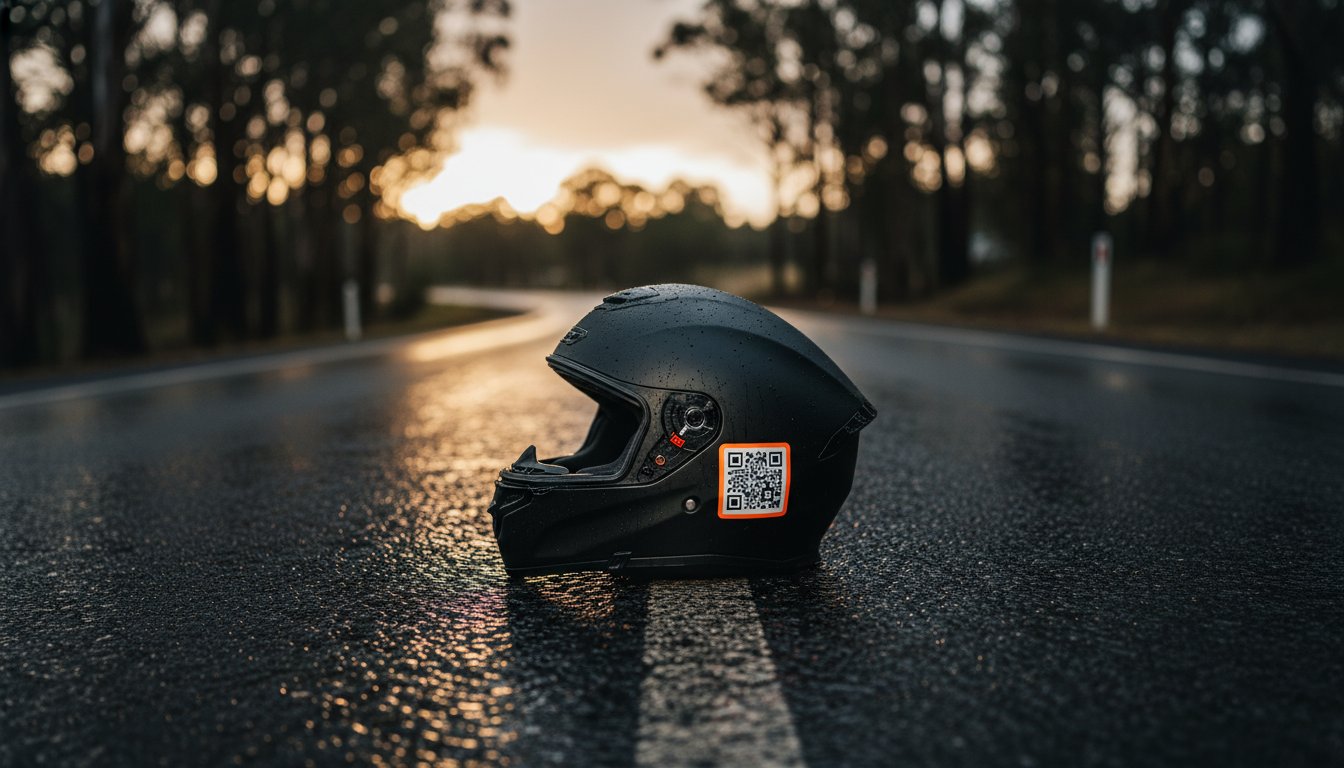
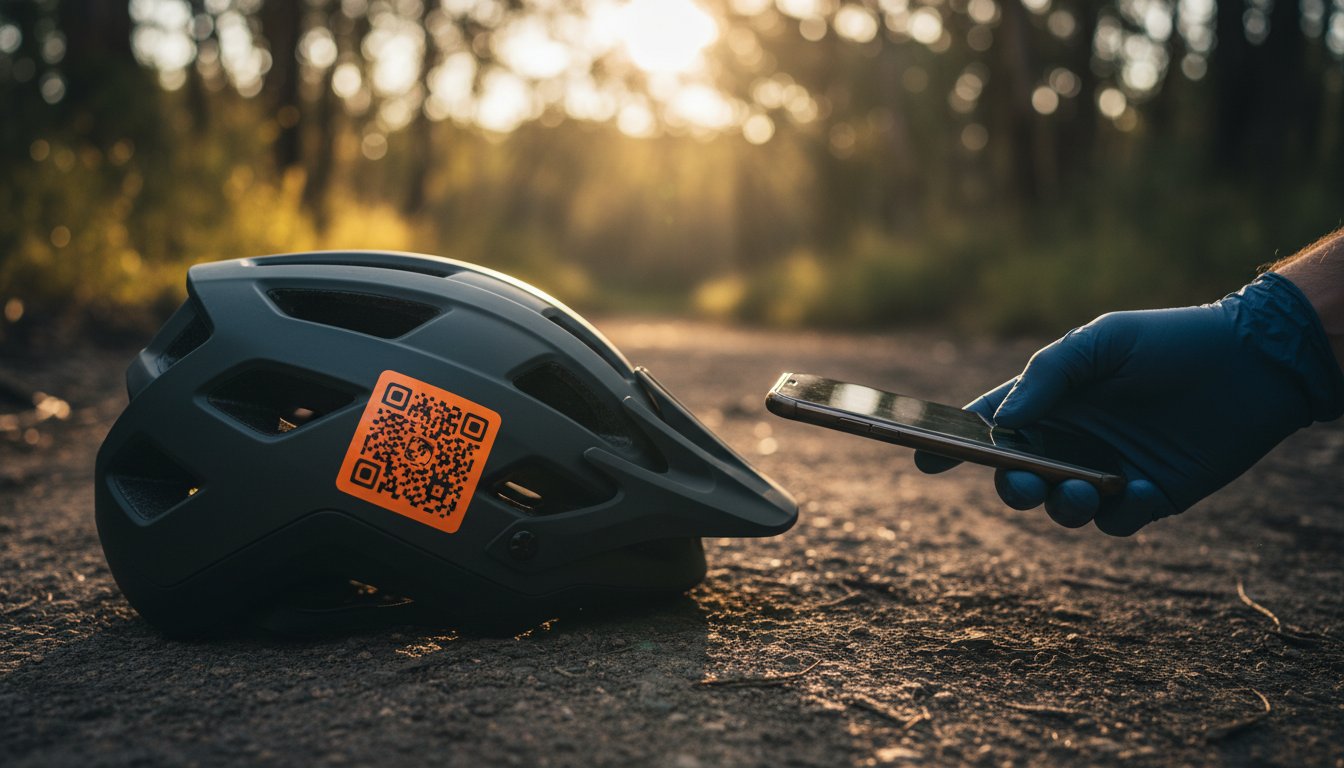
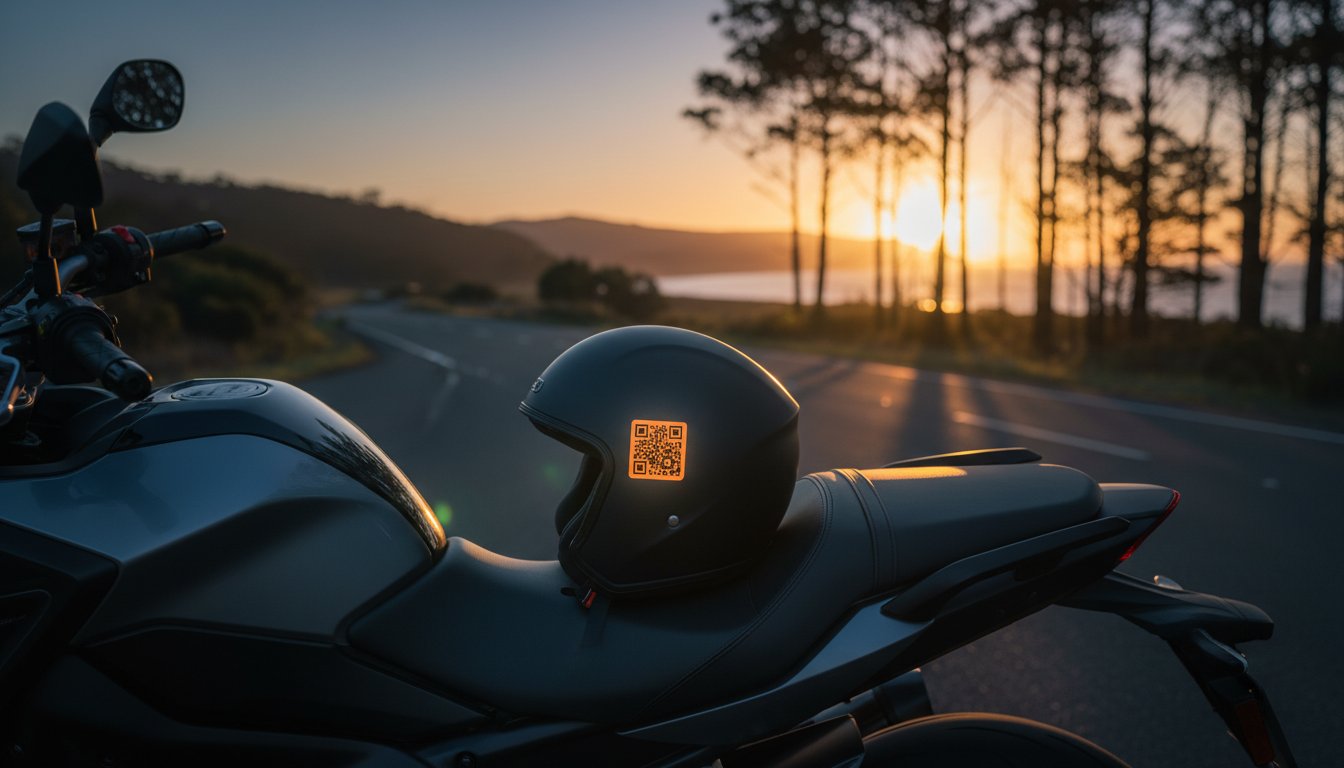
This isn't just a tool for your back pocket. The Wallet Card is a versatile safety solution for kids’ school bags, elderly parents, and solo adventurers who enjoy exploring the bush. Whether you carry a designer leather piece or a simple card sleeve, the slim profile fits perfectly without adding bulk. It ensures that if a child is lost or an elderly relative becomes disoriented, a helpful stranger can facilitate a quick reunion. For those who prefer two wheels, you might also consider why your motorcycle helmet needs an emergency QR code sticker in Australia. Many riders keep their primary identification in their jacket, and having a secondary scan point on your helmet provides a vital backup for road responders. Every scan counts when your safety is on the line.
Empower Your Daily Carry for Life’s Unforeseen Moments
Your wallet should be more than a place to store plastic cards; it needs to be a silent guardian that works when you can't. We have explored how the shift to digital identity in 2026 makes physical backups essential for every Australian. You now know that active GPS trackers often fall short because of battery anxiety and high costs, while passive QR tags offer a lifetime of protection. By choosing a solution that provides masked contact privacy, you ensure your personal details stay safe from the 1.15 million identity theft reports recorded in late 2025.
As an Australian owned and operated business, we are committed to providing simple technology with life-changing impact. There are no monthly subscription fees to drain your bank account and no complex hardware to charge. You deserve the peace of mind that comes from being prepared for any emergency. Take the final step in upgrading your security today. Secure your wallet today with a ContactMeTag Emergency QR Card and join the community of Aussies who are already protected. When you can't speak, your QR code speaks. Stay safe out there.
Frequently Asked Questions
What is the best way to secure a physical wallet in 2026?
The most effective way to secure your physical wallet in 2026 is by using a hybrid security model. Combine an RFID-blocking layer to prevent data skimming with a passive QR code tag for recovery and emergency medical access. This ensures your cards are protected from invisible digital theft while providing a reliable way for a Good Samaritan to return your property if it is lost.
Avoid relying solely on active GPS trackers that require charging. A durable, battery-free card provides a permanent safety net that never fails during a crisis. It's the most practical way to ensure your essentials are always protected, regardless of tech failures or flat batteries.
How do I set up emergency contact (ICE) info in my wallet?
Setting up your ICE information is a simple three-step process. First, slip your QR code card into a visible slot in your wallet. Second, scan the code with your smartphone to open your secure setup portal. Finally, enter your vital medical details and the contact numbers for your next of kin.
This digital profile is far superior to old-fashioned paper slips. It allows you to include comprehensive data like blood type and allergies that wouldn't fit on a handwritten note. Once saved, your profile is instantly available to any responder who scans the tag during an emergency.
Are QR code wallet tags safer than GPS trackers like AirTags?
QR code tags are safer for personal privacy and long-term reliability. While the $29 AirTag 2 offers precision tracking, it also carries a stalking risk and requires a battery that eventually dies. QR tags are passive, meaning they don't broadcast your live location to anyone, protecting you from being followed by unauthorised users.
Passive tags also empower the finder to take action. A GPS dot on a map doesn't help a stranger return your wallet, but a QR code provides an instant, masked connection. This human-centric approach is often faster and more secure for recovering lost items in public spaces.
Do I need a subscription to use a digital ICE card in Australia?
No, you do not need a subscription to use a ContactMeTag digital ICE card. Unlike Tile, which charges $2.99 a month for premium features, our safety tags are a one-time purchase. You get lifetime access to your secure profile and masked contact features without any ongoing fees or hidden costs.
What happens if a stranger scans the QR code in my wallet?
When a stranger scans the code, they see only the information you have chosen to make public, such as your medical alerts or a "Contact Owner" button. Your private mobile number and home address remain masked. The system acts as a secure bridge, allowing the finder to message you through a relay without ever seeing your actual contact details.
Can I update my medical information on my wallet tag if it changes?
Yes, you can update your medical information at any time through your secure online portal. When you change your details digitally, the physical QR code in your wallet stays exactly the same. This allows your safety profile to evolve with your health needs without the hassle of buying a new card.
Is it better to have a digital wallet or a physical one for safety?
You should use both to ensure maximum safety. While approximately 79% of Gen Z now use digital wallets regularly, relying on a phone alone is risky if the battery dies or the screen smashes. A physical wallet equipped with an emergency tag serves as a vital backup that works in every situation, especially when you can't speak for yourself.
What should I do immediately if I lose my wallet in Australia?
Immediately lock your bank cards using your mobile banking app to prevent unauthorised transactions. Next, log in to your ContactMeTag portal to see if your wallet has been scanned by a Good Samaritan. If you suspect theft, report the loss to your local police station to obtain a reference number for insurance purposes.